Saudi Arabia, the UAE, and Qatar are constructing nationally strategic creative economies by investing in the infrastructure, regulation, and incentives that will position the region as a globally competitive screen industry for decades to come. This is not aspiration. It is already underway.
However, The GCC is not a single market. Each country has its own regulatory framework, incentive structure, cultural dynamics, and relationship architecture. What matters is who you know, how you navigate, and whether the people attached to your project carry credibility on both sides of the table.
Beyond the GCC and in the broader MENA region, governments are investing at historic scale in screen infrastructure, content strategy, and production incentives. Egypt, Morocco, and Jordan each bring distinct strengths to the regional media landscapes as vibrant creative industries, production service hubs, and co-production partners with growing international reach. This is not aspiration. It is already underway.
SAUDI ARABIA
The Scale of Vision 2030
Saudi Arabia is rapidly emerging as a powerhouse within the GCC and MENA media landscape, propelled by the ambitions of Vision 2030. The Saudi Film Commission has introduced one of the world’s most attractive incentive programs for filmmakers, offering productions a cash rebate of up to 40% on eligible in-Kingdom expenditure. This competitive rebate is designed to attract both regional and international projects, making Saudi Arabia a compelling destination for screen production.
The Red Sea International Film Festival has established Jeddah as a credible intersection point between regional and international cinema.
UNITED ARAB EMIRATES
The Region’s Commercial Hub
The UAE stands out as the region’s leading commercial and creative gateway, strategically positioned at the intersection of East and West. International regulatory alignment, a business-friendly environment, and a concentration of global studio and platform regional headquarters have established the UAE as a premier destination for media and entertainment investment. Abu Dhabi’s twofour54 and Image Nation have built credible co-production track records with international partners, facilitating a steady pipeline of major international and regional productions. Dubai, with its world-class infrastructure, free zones like Dubai Studio City, and a highly skilled, multicultural workforce, has become a magnet for content creators, broadcasters, and digital platforms seeking to serve both the Arab world and global audiences.
QATAR
Cultural Investment and Growing Capacity
Qatar is emerging as a vibrant player in the regional media landscape, driven by a strategic commitment to cultural and creative industries. Central to this growth is beIN Media Group, a leading global sports and entertainment broadcaster, which has not only elevated Qatar’s international profile but also fostered a robust local media ecosystem. The Doha Film Institute (DFI) plays a pivotal role in nurturing creative talent, supporting filmmakers through funding, training, and international networking opportunities. DFI’s annual Ajyal Film Festival and Qumra industry program attract global attention, encourage collaboration, and showcase both local and international cinematic voices.
EGYPT
The Arab World’s Leading Creative Industry
Egypt has been the creative heart of Arab cinema for a century. Its pool of writers, directors, and crew remains the most experienced in the region and the most in-demand. The government is actively investing in repositioning the sector, backed by the Egyptian Media Production City, the largest media complex in the Middle East and Africa, and a Film Commission providing dedicated support for foreign productions. For international producers, Egypt offers unmatched creative talent, iconic locations, competitive costs, and a growing openness to co-production partnerships.
MOROCCO
A Leading Production Hub and Emerging Creative Player
Morocco has spent decades establishing itself as one of the world’s most capable production service destinations. A 30% cash rebate for foreign productions, official co-production agreements with numerous partner countries, and an extraordinary diversity of landscapes like desert, mountain, coast, and historic city, have made it a default choice for major international shoots. What is changing now is that Morocco is no longer content to be only a backdrop. A generation of Moroccan filmmakers is producing work that is winning recognition at the world’s leading festivals and being sought by international platforms on its own creative terms.
JORDAN
Experienced Crews, Versatile Locations, and Top Regional Incentives
The Royal Film Commission offers a cash rebate of up to 45% — among the highest anywhere in the world. Wadi Rum, Petra, and Amman’s urban environments provide a uniquely compact range of locations that can double for multiple regional contexts. Jordan’s crews are experienced, internationally trained, and accustomed to working on major productions — from Lawrence of Arabia to Dune. The Royal Film Commission provides end-to-end production support with strong institutional backing, and a growing local industry is establishing Jordanian storytelling as a distinct and internationally recognised voice in Arab cinema.
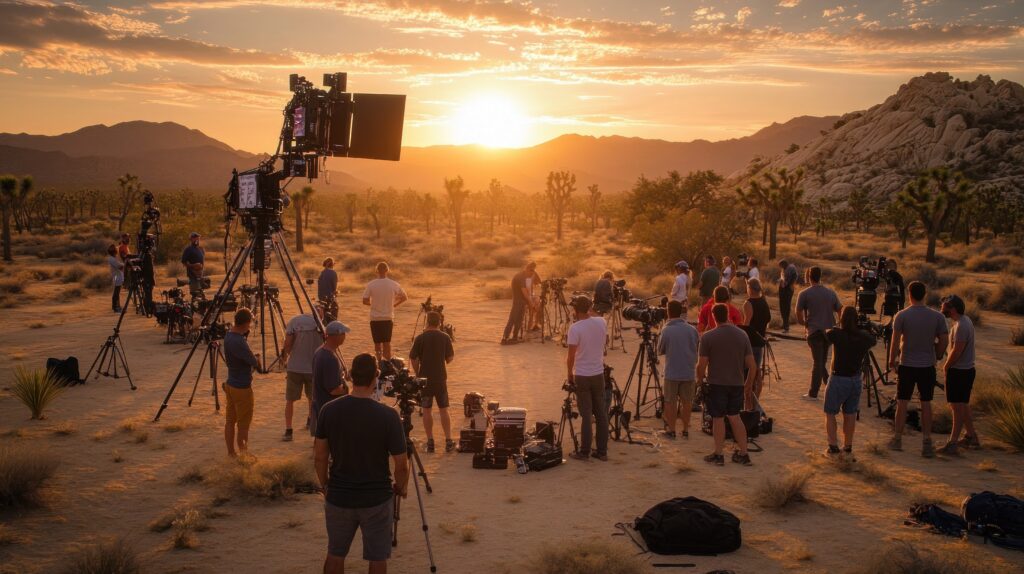
The region offers highly competitive production incentives, a variety of distinctive filming locations, and a rapidly developing co-production infrastructure. In addition, there is a substantial audience that is not only young and digitally connected, but also remains underserved by the current offerings from global content providers.
There is a genuine and commercially significant interest from global platforms in authentic Arabic-language content. This creates a unique opportunity for regional producers, but success in seizing it depends on partnering with experienced leaders who have strong international relationships.